Wellness

Best Protein Powder for Women of 2026

There's a particular disappointment that comes with a protein shake that tastes like sweetened chalk—or worse, one that leaves you bloated and gurgling through your workout. Protein powder has a reputation problem, and honestly, it's earned: plenty of tubs promise 25 grams a scoop and deliver a gritty, artificial aftertaste you have to choke down. What a good one actually fixes is simpler than the label suggests. It turns hitting your protein target into something you look forward to, whether that's a fast breakfast on a rushed morning or the twenty minutes after a lift.

We've spent the past four months blending 14 powders into water, milk, coffee, and oatmeal, and the gap between the best and the rest is wide. The ones worth your money dissolve without a shaker ball, don't foam up like meringue, and sit easy on the stomach. One thing I'd tell any first-time buyer: compare the scoop size to the serving count, because a tub advertising 30 servings at a tiny scoop can be worse value than a bigger one with fewer. The picks below span flavored and unflavored, dairy and plant.

1

Optimum Nutrition Gold Standard Whey

Top Pick
Optimum Nutrition Gold Standard Whey

Everyday protein

Our Score 9.2/10
Check Price

Worth Noting

  • Not for dairy-free diets; may bloat sensitive stomachs
Size
2 lb
Protein Source
Whey isolate and concentrate
BCAAs Per Serving
0.19 oz
Protein Per Serving
0.85 oz

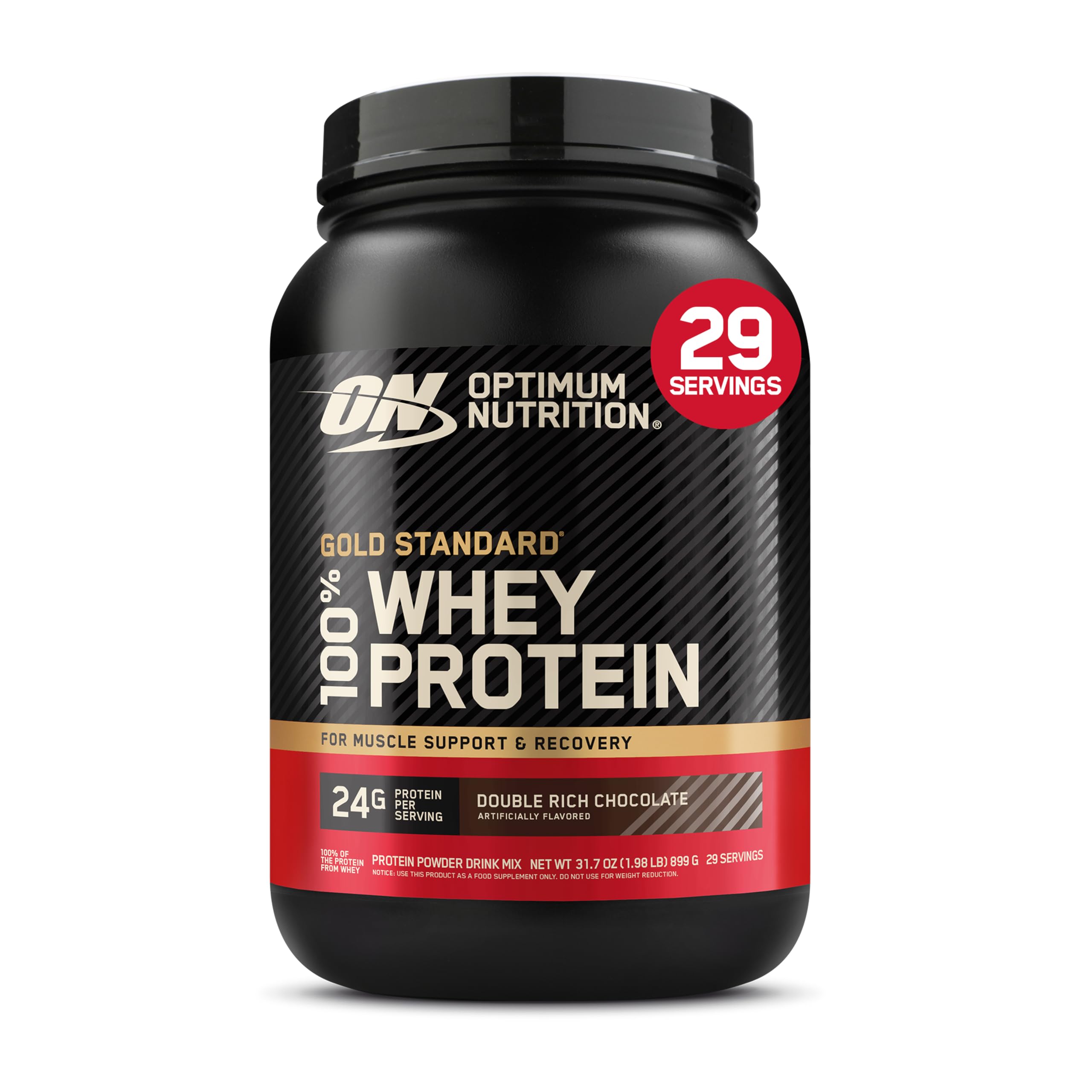
The test we set for every whey in this guide was a glass of water and a spoon — no blender, no shaker ball. Gold Standard passed on the first try: smooth, no grit at the bottom, nothing to chew through. That reliability is most of why it's our top pick. The rest is the scoop itself, with 24 grams of complete whey protein from isolate and concentrate, 5.5 grams of BCAAs, and 11 grams of essential amino acids.

That 24 grams is the number to hold against the collagens here. A collagen scoop gives you about 11 grams of an incomplete protein, which makes it a skin-and-joint supplement rather than the powder you count on after a lift or at breakfast. Collagen is worth buying — just not as your only protein powder. For recovery, fullness, and the general question of whether you're getting enough, a complete whey like this one is the answer.

The Double Rich Chocolate is the version to start with. It's sweet enough in water to drink without bargaining and doesn't turn syrupy when you make it with milk, which is where most chocolate powders fall apart. It also stirs up with a spoon in a pinch — the instantized formula really is clump-free, not just clump-free in a blender.

It's the priciest tub in this group and still the one we reach for first, because a powder you finish beats three you don't. Two pounds lasts at a scoop a day, the flavor holds up past week three, and it's the tub we measure every other whey here against.

Bottom line: Our default for most women: 24 grams of complete whey protein per scoop, a chocolate that mixes smooth in water, and the consistency to keep drinking past week three.
2

Dymatize ISO100

Dymatize ISO100

Lean macros

Our Score 9.2/10
Check Price

Worth Noting

  • Small 1.34 lb tub empties fast at a daily scoop
Protein Source
Hydrolyzed whey isolate
Sugar Per Serving
0.04 oz
Protein Per Serving
0.88 oz
Calories Per Serving
Under 120

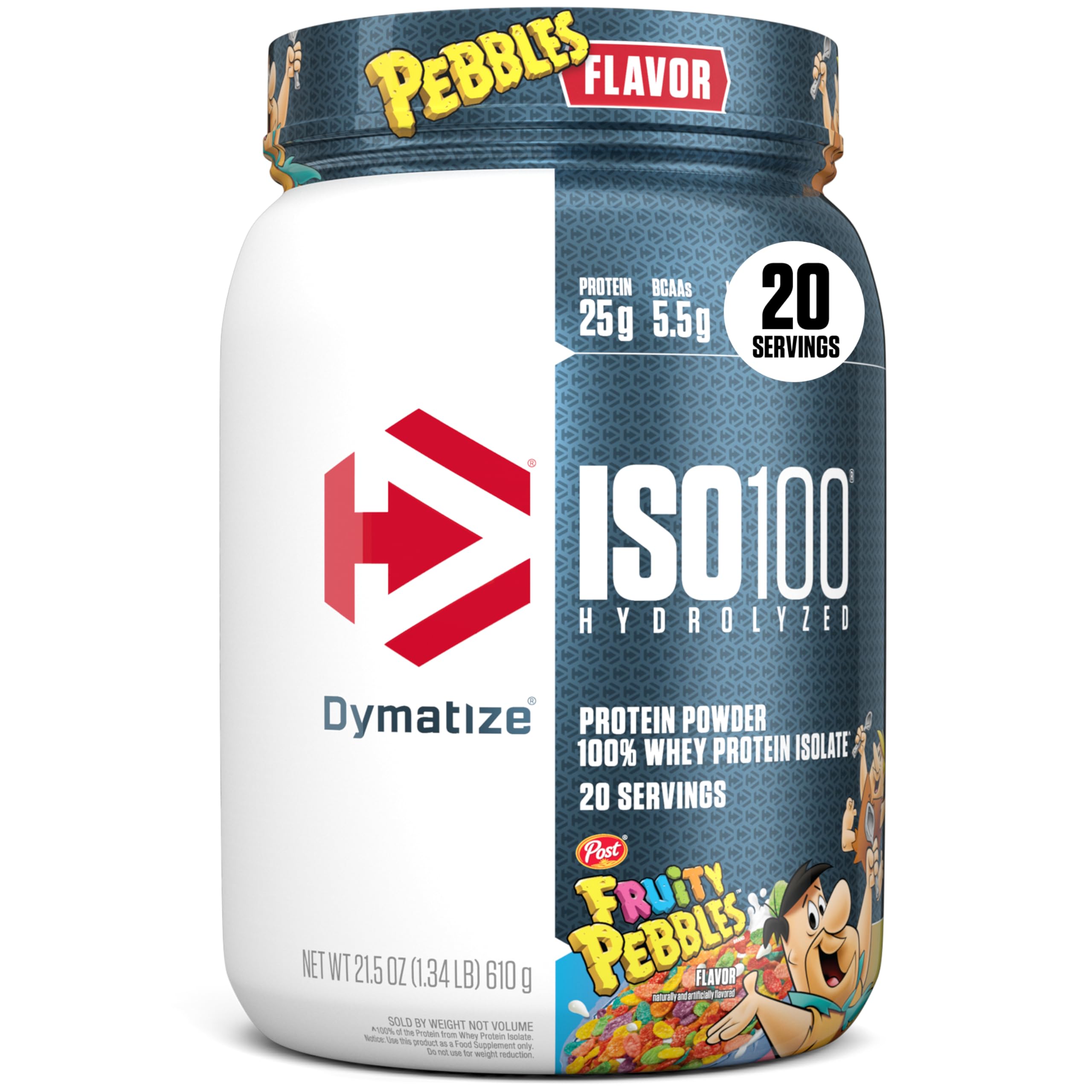
Twenty-five grams of protein, a gram of sugar, a gram of fat, under 120 calories. Those numbers are the whole reason ISO100 exists, and they're why it's on this list. It's a whey isolate, filtered to strip out most of the carbohydrate and fat that come along with a concentrate, so the scoop is nearly all protein.

We reach for this one on days when the goal is protein and nothing else — a cut, a calorie count, a stretch where the rest of the day is already rich. It's also the most fun powder in this guide: the Fruity Pebbles flavor lands somewhere between cereal milk and a milkshake, and it blends thin in water with no chalk. A lean powder that tastes like a treat is a lean powder you'll keep drinking.

The trade-offs are volume and sweetness. The tub is 1.34 pounds, so a daily scoop empties it faster than the two-pound bags here, and the flavor is assertive enough that plain water after a run can feel like a lot. Oat milk, or a scoop thrown into a banana smoothie, is where this one is happiest.

Bottom line: The lean whey we hand to anyone counting calories or cutting: 25 grams of protein, a gram of sugar, and a flavor that doesn't taste like a compromise.

3

Premier Protein Powder

Premier Protein Powder

Hitting protein goals

Our Score 9.2/10
Check Price

Worth Noting

  • Only 17 servings per tub
Protein Source
Whey
Servings Per Tub
17
Sugar Per Serving
0.04 oz
Protein Per Serving
1.06 oz

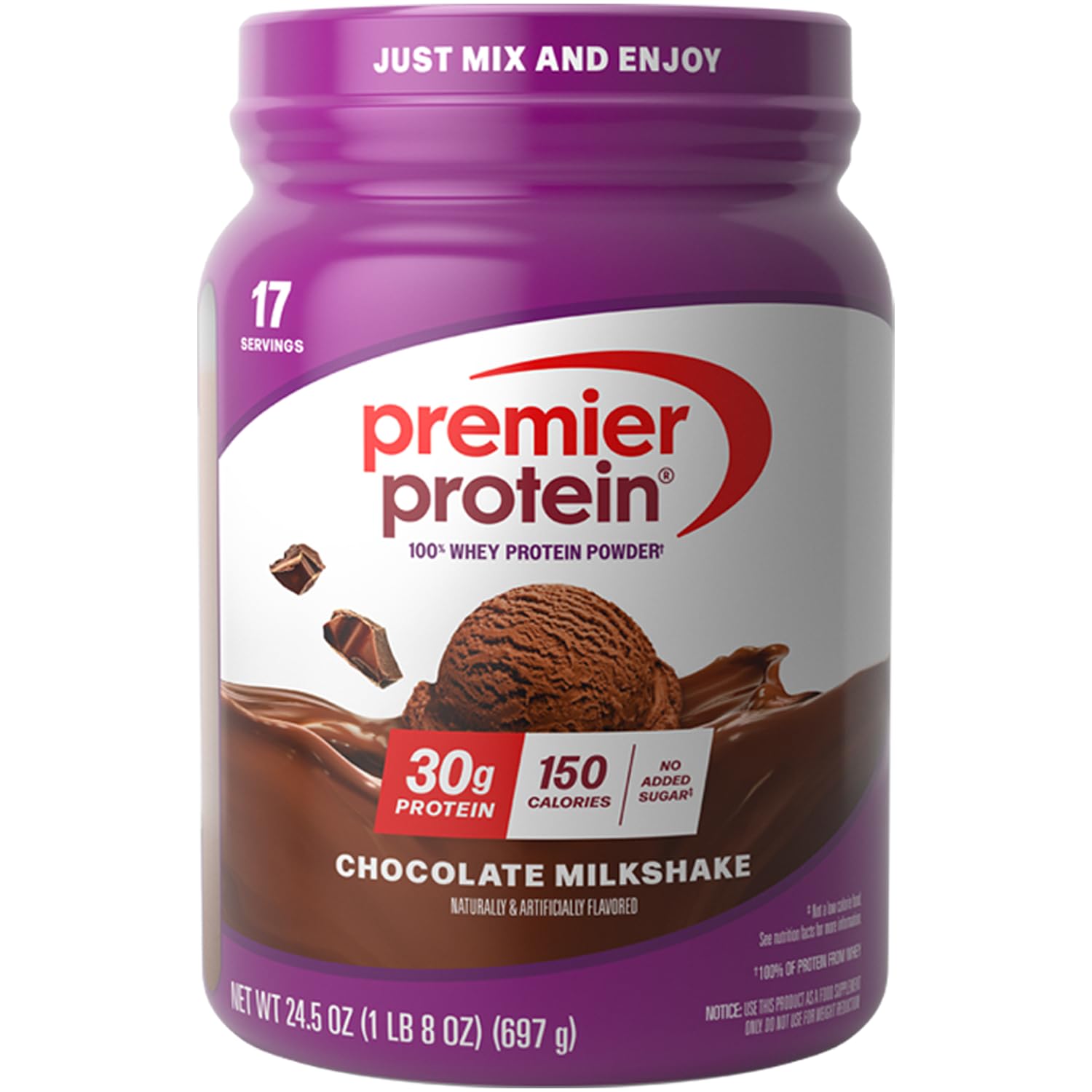
Thirty grams of protein in a single scoop is the biggest number in this guide, and it changes how you use a powder. Most of the whey options here land at 24 or 25 grams, which means a half scoop extra if you're chasing a target. Premier gets you there in one, with a gram of sugar, 3 grams of carbs, and 150 calories.

The chocolate is rich and leans sweet, and it holds up in water, which is the version you'll actually make on a weekday. Get the order right, though: water in the cup first, then powder, then a shaker ball. Dumped the other way around, it clumps and sticks to the bottom, and no amount of shaking rescues it.

Where it lands for us: this is the tub for a hard protein number — a strength block, recovery from surgery, a clinician's nudge to eat more protein — when you want the whole serving in one drink and don't want to think about it. The texture is thicker than our top pick and less forgiving of a lazy shake, but 30 grams a scoop means fewer servings to buy on the way to your target.

Bottom line: For a hard protein target, this is the one: 30 grams in a single scoop with a gram of sugar, at a price that undercuts most of the whey here.

4

Orgain Organic Vegan Protein

Orgain Organic Vegan Protein

Dairy-free diets

Our Score 9.0/10
Check Price

Worth Noting

  • Stevia sweetness that reads too sweet to some
Size
2.03 lb
Added Sugar
0 g
Protein Source
Organic pea, brown rice, and chia
Protein Per Serving
0.74 oz

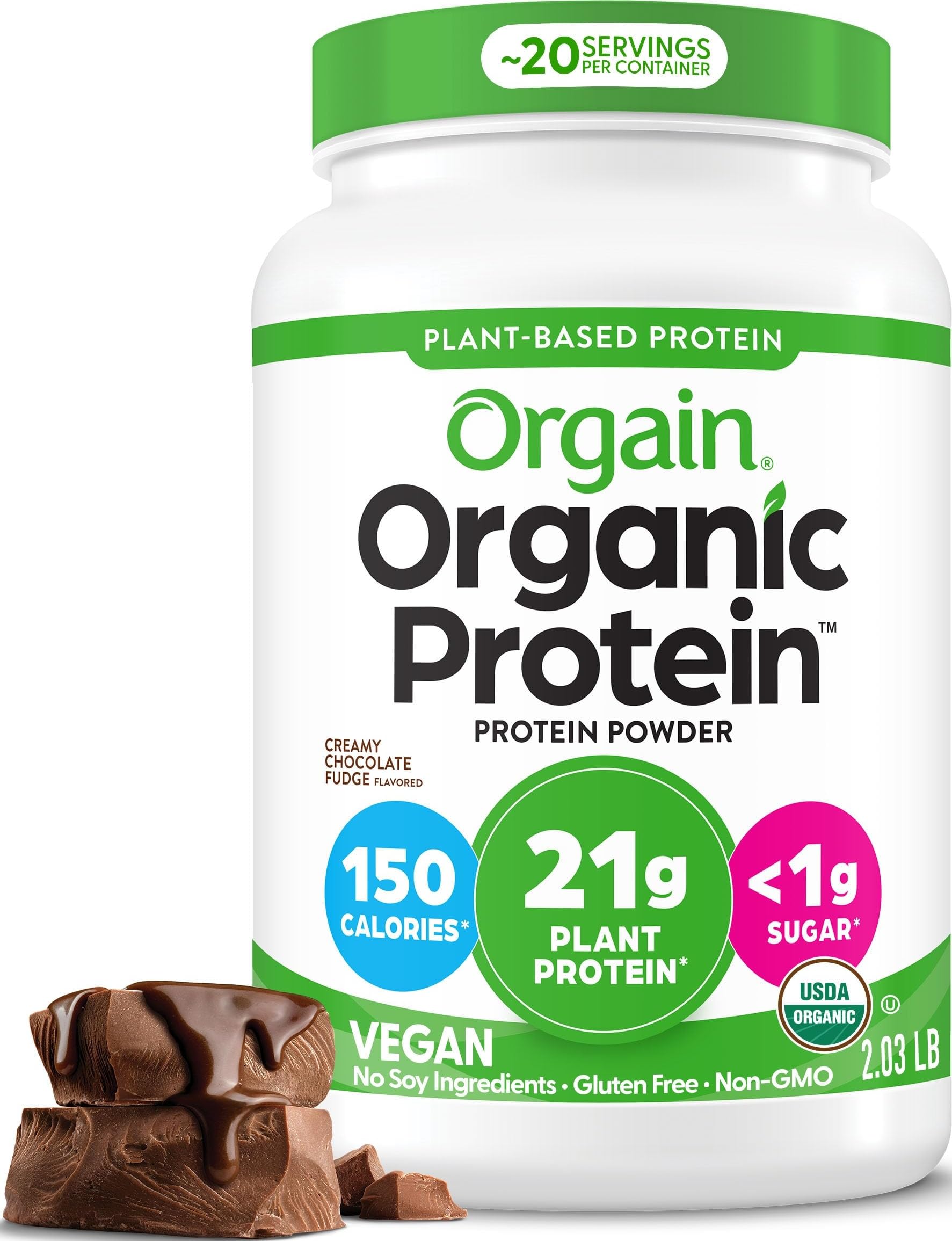
Plant protein usually fails in one of two directions: chalky and grassy, or sweet enough to taste like a candle. Orgain goes sweet. There's no sugar in the tub, but it's sweetened with stevia, and the first sip is sweeter than a whey shake — a surprise if you were bracing for something austere.

Underneath the sweetness is a solid formula. Twenty-one grams of plant protein from organic pea, brown rice, and chia — three sources, which is how a vegan powder gets all nine essential amino acids. It's USDA Organic and free of carrageenan, erythritol, soy, and dairy, with 50 organic superfoods in the blend. That's an ingredient list that's hard to find in this tier.

Texture depends entirely on how you make it. Shaken with water and ice it's gritty, and the grit is the thing to plan around. Blended with almond milk it turns thick and creamy, and a frozen banana carries it the rest of the way to a milkshake. Treat it as a smoothie ingredient rather than a shaker-cup powder and it's a different drink.

This is the one we hand to anyone who's dairy-free, vegan, or simply done with whey. It won't match Premier's 30 grams, so if you're chasing a number you may want a second scoop or a protein-forward meal alongside. For a daily breakfast shake that brings fiber and vitamins along with the protein, it's the best plant option here.

Bottom line: Our pick if you're dairy-free or vegan: 21 grams of complete plant protein, organic, and creamy once you blend it rather than shake it.

5

Sports Research Collagen Peptides

Sports Research Collagen Peptides

Skin and joints

Our Score 9.2/10
Check Price

Worth Noting

  • Not a complete protein, so it can't replace whey
Size
16 oz
Flavor
Unflavored
Collagen Type
Type I and III
Collagen Per Serving
0.39 oz

We started with black coffee, the hardest test for an unflavored powder, and it disappeared — no film on top, no slick at the bottom of the mug, no change in the taste. That's the whole job for a collagen you'll take every morning, and this one does it with 11 grams of type I and III peptides and a full spread of 18 amino acids.

To be clear about what it isn't: collagen is an incomplete protein and won't stand in for your whey or plant scoop. This is the powder for skin, hair, nails, and joints. What separates it from the other collagens here is that it's third-party tested, Non-GMO, keto and paleo certified, and neutral enough to disappear into coffee, tea, or a smoothie with no flavor to work around.

One thing worth knowing: the no-taste reputation depends on the liquid. In coffee, tea, or a smoothie it's invisible. Stirred into plain water it reads flat and faintly savory — true of nearly every collagen, and the fastest way to decide you don't like one. Keep it in something with flavor and a 16-ounce tub goes a long way.

Bottom line: The collagen we trust in a morning coffee: 11 grams of type I and III peptides that dissolve without a film, for skin, hair, nails, and joints rather than a protein target.

6

Anthony's Collagen Peptide Powder

Anthony's Collagen Peptide Powder

Budget collagen

Our Score 9.4/10
Check Price

Worth Noting

  • Type I and III only, with nothing targeted at joints
Size
1 lb
Source
Grass-fed bovine from the USA
Collagen Type
Type I and III
Protein Per Serving
0.39 oz

Anthony's arrives in a resealable bag rather than a tub, which sounds trivial until you've tried to fit four canisters on one shelf. The bag takes a fraction of the space, there's no plastic scoop cradle to dig through, and there's less packaging to throw out. Inside is 11 grams of hydrolyzed type I and III peptides per serving, from grass-fed cattle raised without hormones or antibiotics.

For straight value, this is the collagen we keep on the shelf. It dissolves quickly in coffee and tea without clumping, there's no aftertaste to hide, and it's the budget option among the collagens here. What it doesn't offer is range: types I and III only, nothing aimed at joints. If a complaining knee is the reason you're shopping, a multi-type formula covers more ground — otherwise this is the sensible everyday buy.

Bottom line: The everyday collagen for a tight budget: plain type I and III peptides that dissolve quickly in coffee and come in a bag that takes up almost no shelf space.

7

Wholesome Wellness Multi Collagen

Wholesome Wellness Multi Collagen

Multi-type collagen

Our Score 9.0/10
Check Price

Worth Noting

  • Contains beef, chicken, fish, and eggshell, so it isn't vegetarian
Size
1 lb
Flavor
Unflavored
Sources
Beef, chicken, fish, and eggshell membrane
Collagen Types
I, II, III, V, and X

Five collagen types is more than any other powder here, and that list is the reason to look: types I and III for skin and hair, type II for cartilage, plus V and X, drawn from grass-fed beef, cage-free chicken, wild-caught fish, and eggshell membrane. If your reason for buying collagen is a knee that complains on stairs, type II is the piece most single-source bovine powders leave out.

It behaves well in a mug, which matters more than the type list. It dissolves in hot coffee and in cold water, and it's neutral enough that you won't pick it out of either. The tub is a pound, the label carries third-party testing, and it's made in a U.S. GMP-certified facility.

Where we land: if the goal is joint comfort and a broader spread of collagen types rather than a specific dose of one, this is the most complete formula in the group and the one we point to first. If you want a known amount of one particular type, a single-source powder is easier to reason about.

Bottom line: The most complete collagen formula here, worth it if joints rather than skin are your reason to buy, and neutral enough to disappear in coffee.

8

Vital Proteins Collagen Peptides Advanced

Vital Proteins Collagen Peptides Advanced

Skin hydration

Our Score 9.0/10
Check Price

Worth Noting

  • Taste is more noticeable than the unflavored label suggests
Size
20 oz
Source
Grass-fed, pasture-raised bovine
Vitamin C
100% daily value
Hyaluronic Acid
120 mg

A plain collagen powder is one ingredient; this is a small formula. Alongside the hydrolyzed grass-fed bovine peptides, Vital Proteins adds a full daily dose of vitamin C, a cofactor your body uses when it assembles new collagen, and 120 mg of hyaluronic acid — the part of the pitch pointed at skin hydration rather than joints.

How it dissolves depends on the liquid. In hot coffee it goes in cleanly and disappears, which is how most people use it. In cold water it clumps, and stirring harder doesn't fully rescue it. Warm liquid first, then whatever else you're adding, is the way this tub behaves at its best.

At 20 ounces it's the largest collagen tub here, so a daily scoop doesn't feel like it's burning through the supply. It's dairy-free, gluten-free, and paleo friendly, and the unflavored formula means it can go into coffee, a smoothie, or soup without changing the dish.

The vitamin C and hyaluronic acid are what put it on this list: it's the collagen to choose if you want the beauty-focused extras without buying three separate bottles. If you want plain peptides that vanish in coffee and nothing else, Sports Research's tub is the simpler, more single-minded buy.

Bottom line: Choose this one for the extras, not the collagen alone: a full daily dose of vitamin C and 120 mg of hyaluronic acid, with the caveat that it needs a warm liquid.

How We Tested 14 Protein Powders

We started with about 60 powders and cut anything that hid its protein-per-calorie math behind a proprietary blend, counted a scoop smaller than a standard serving, or skipped third-party testing and a clear amino acid panel. We deliberately kept a mix of formats on the shortlist—whey isolate, whey concentrate, plant-based blends, and plain unflavored collagen—because those do different jobs. That left 14 tubs, which we used daily for four months.

Every powder got the same first run: 8 ounces of cold water in a cheap shaker bottle with no whisk ball, ten seconds of shaking, then poured through a fine mesh strainer to see what stayed behind. We noted clumps, foam, and whether the powder sank into a paste before we could even get the lid on; later we stirred each one into a glass with a spoon to see how it behaved with no help at all. Flavor was judged first in water, then in milk, since dairy hides a lot of sins, and we tracked aftertaste and sweetness for a full ten minutes after the last sip. Unflavored options went into hot coffee and soup, where any change in smell or mouthfeel counted against them.

The part you can't get from a label is how these sit. We logged bloating, gurgling, and anything else in the hour after drinking, with one lactose-sensitive tester running a second pass on every dairy-based tub. We also paid attention to whether a shake actually held us until lunch and whether we were consistently clearing our daily protein target, because a powder you avoid using isn't effective no matter what the panel says. Finally, we did the math: cost per gram of protein rather than cost per tub, and a count of the real scoops in each container against the number printed on the label. We kept a running note on which ones we'd spend our own money on again, and that note shaped the list more than any single score.

How to Choose a Protein Powder for Women

Decide What You Want the Protein to Do

Two very different products get sold as protein powder, and confusing them is the most expensive mistake in this category. Whey and plant blends are complete proteins at 20 to 30 grams a scoop, built for recovery, fullness, and hitting a daily target. Collagen peptides run about 11 to 20 grams of an incomplete protein and are sold for skin, hair, nails, and joints.

Collagen is a fine purchase — it just doesn't count toward your protein goal. If you want both jobs done, budget for both. Unflavored collagen stirs into the same mug as a flavored whey without either one taking over.

Match the Type to Your Stomach and Your Diet

Whey concentrate is the creamiest and the most likely to carry lactose; an isolate is filtered further, leaner, and gentler if dairy tends to sit heavily. If dairy is out, look for a plant blend with more than one source. Pea alone runs low in methionine, rice alone runs low in lysine, and the combination covers both — which is why a single-source plant powder under 20 grams per scoop is usually a thin blend.

Collagen comes from bovine, marine, chicken, or eggshell sources. A multi-type formula is the only way to get type II, the type associated with cartilage, and single-source bovine powders rarely include it.

Do the Scoop Math Before You Compare Prices

The front of the tub sells the powder; the back tells you what you're paying for. Protein per scoop tells you how many scoops it takes to reach your target, and servings per tub turns that into a real cost. A 30-gram scoop means fewer servings in the same size container.

One trap: a tub that arrives half-full isn't short. Powders settle in transit, sometimes dramatically. Judge the purchase by the stated servings rather than by how the container looks when you peel off the seal.

Flavor, Texture, and the Liquid You'll Actually Use

Unflavored doesn't mean tasteless in everything. Collagen that vanishes in coffee can read flat and faintly savory in plain water, and a chocolate whey that's pleasant in milk can turn thin and chalky in water alone. Start from the drink you already make: a hot mug points to unflavored collagen, a cold shaker bottle points to a flavored whey or plant powder.

Plant powders are the least forgiving. Blended with milk or a banana they turn creamy; shaken with water and ice they grit. Buy for the method you'll really use.

Check the Testing, Not Just the Label Claims

Supplement labels are not pre-approved the way drug labels are, so third-party programs do real work here. A banned-substance or informed-choice mark matters if you compete or are subject to testing. USDA Organic matters if you're buying a plant powder and want to limit conventional pesticide residue.

Keto, paleo, and Non-GMO claims are shorthand for what's been left out. A tub that names specific testing programs is telling you more about how the brand operates than one that only makes claims on the front.

Frequently Asked Questions

Final Verdict

Start with Optimum Nutrition Gold Standard. Twenty-four grams of complete whey protein, a chocolate that mixes smooth in plain water, and a flavor you won't tire of is the combination most women are actually shopping for, and it's the tub we reach for first.

Change the requirement and the pick changes. Counting calories or sensitive to lactose: Dymatize ISO100, at 25 grams and under 120 calories. Chasing 30 grams in one drink: Premier Protein. Dairy-free or vegan: Orgain's plant blend. And if the goal is skin, hair, and joints rather than a protein target, skip whey entirely — Sports Research's collagen vanishes in coffee, with Anthony's as the budget route to the same habit.