Wellness

Best Vegan Protein Powder for Women of 2026

You buy a tub of plant protein with good intentions — a fast shake after a workout, more protein on a rushed morning — and the first sip tastes like sweetened sand, or half the scoop is cemented to the bottom of the shaker. Pea and brown rice proteins really are harder to get smooth than whey. What a good one fixes is simple: it dissolves, it keeps you full until lunch, and it doesn't leave you bloated and raiding the pantry an hour later.

I've been through the gritty phase, the chalky vanilla phase, and the months when I blended everything into a smoothie just to hide the texture. Over six months my team worked through 12 vegan powders in shaker bottles, smoothies, and oatmeal, and the gaps in taste, texture, and digestion were wider than the labels suggest. First-timers tend to chase the highest protein number; what keeps a tub in rotation is blendability, mouthfeel, and whether it actually holds you. Cost per serving decides more than sticker price. The picks below are the ones that earned a permanent spot on my counter.

1

EarthChimp Organic Vegan Protein

Top Pick
EarthChimp Organic Vegan Protein

Everyday chocolate shake

Our Score 9.0/10
Check Price

Worth Noting

  • Costs more than our budget picks
  • No added iron or greens blend
Probiotics
1 billion CFU
Added Sugar
0g
Fiber Per Serving
0.14 oz
Protein Per Serving
0.71 oz

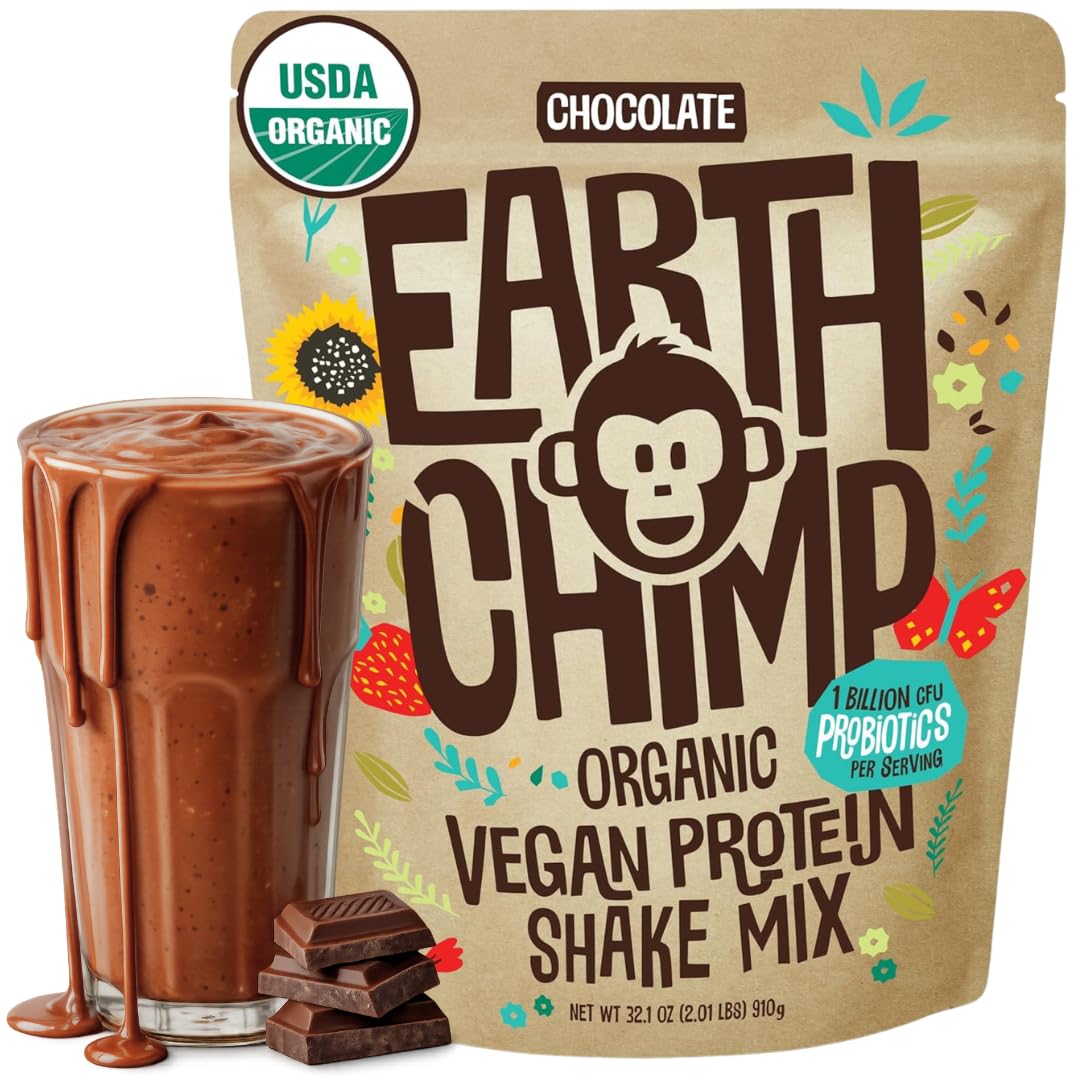
Stevia is the ingredient that quietly decides whether a tub of vegan protein gets finished, and it is the first thing we check on a label now. EarthChimp skips it entirely: the chocolate is sweetened with monk fruit and dates, with organic cocoa, banana, baobab, cinnamon, and turmeric doing the flavor work. A 35-gram scoop carries 20 grams of plant protein, 4 grams of fiber, 120 calories, and a billion CFU of probiotics, and the whole thing is USDA Organic with no erythritol, sugar alcohols, or carrageenan.

That formula is why it sits at the top of this list. Across the three things that decide whether you will actually drink the stuff — taste, texture, and how easily it disappears into liquid — this is the strongest record in the group. The chocolate reads like dark chocolate rather than candy, and it comes together in a shaker bottle with plain water, not just a blender with milk. None of the other picks here manage all three.

The probiotics and fiber earn their place too. Pea-heavy blends are where bloating usually starts, and this is the pick where that complaint mostly does not follow, which we put down to the fiber-and-culture combination rather than the protein source alone.

What it does not do: there is no added iron and no greens blend, so it is a protein powder rather than a nutrition catch-all. It also costs more than the Orgain bags, which is the price of a cleaner sweetener. If iron and greens matter more to you than monk fruit, our greens pick is the swap.

Bottom line: The tub we recommend first: 20 grams of plant protein, monk fruit instead of stevia, and the best taste-and-texture showing in this group.
2

Orgain Organic Vegan Protein

Orgain Organic Vegan Protein

Budget daily protein

Our Score 9.0/10
Check Price

Worth Noting

  • Stevia-forward sweetness some drinkers never adjust to
Sugar
0g
Certifications
USDA Organic, Non-GMO
Protein Sources
Pea, brown rice, chia
Protein Per Serving
0.74 oz

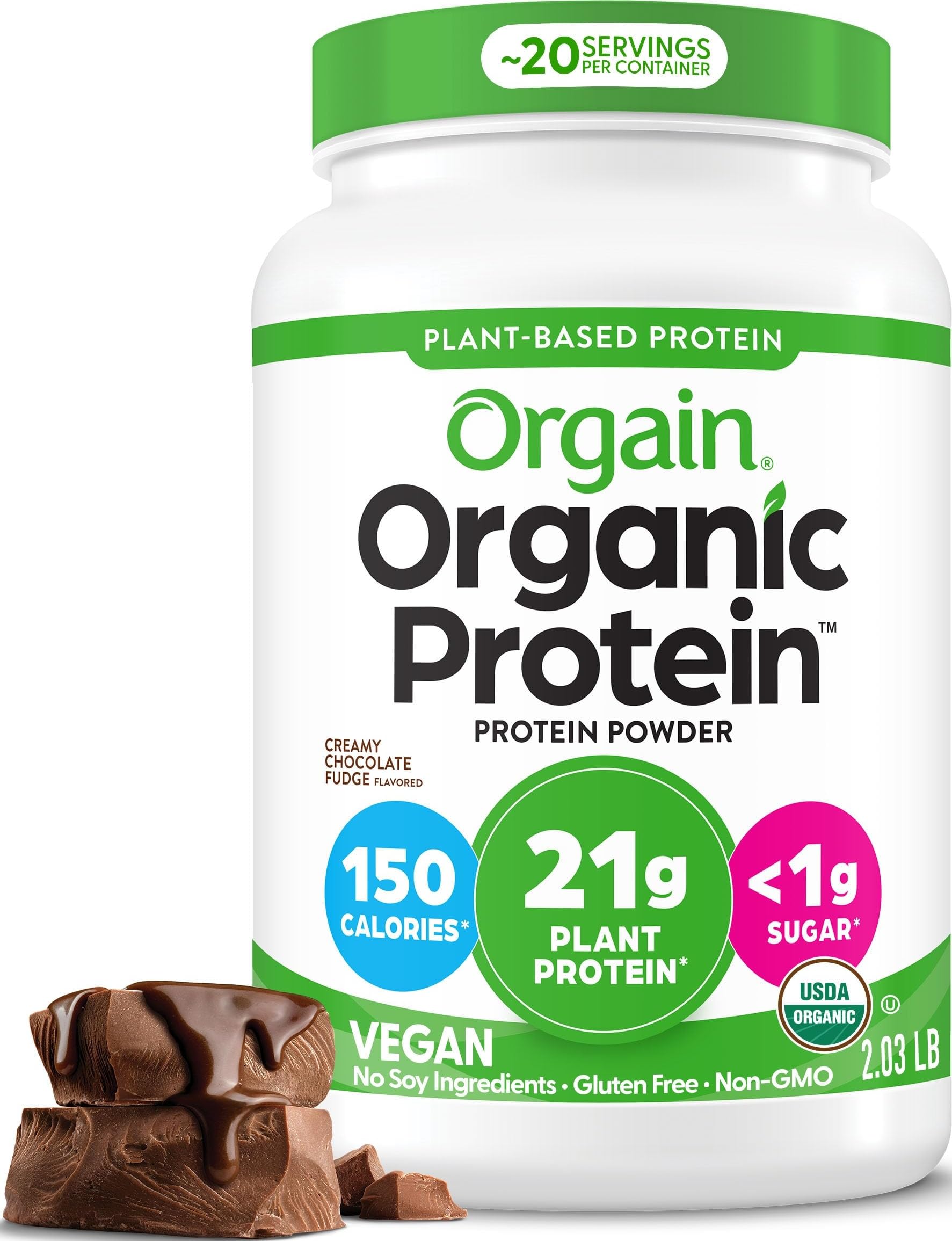
This is the tub we point people to when they want a vegan protein they can drink every day without thinking about the cost. Twenty-one grams of organic pea, brown rice, and chia protein per serving, zero grams of sugar, no erythritol, no carrageenan, no soy, and certified USDA Organic — in the lowest-priced flavored bag in this group. That combination is hard to argue with.

What earns it a place beyond the price is how forgiving it is. Shaken into almond milk it turns thick and creamy with a fudgy cocoa finish, and it holds hunger for a few hours, which is more than we can say for the thinner powders here. The 2.03-pound bag is also the plainest, most utilitarian thing on this list, and there is something reassuring about a protein powder that does not try to be a wellness program.

Water is where it needs help. Shaken thin it goes chalky and slightly gritty, so we use milk or a blender with a frozen banana, and the texture problem disappears entirely. Do that and it drinks as well as anything here.

The one thing no workaround fixes is the sweetness. Orgain leans hard on stevia, and stevia is the ingredient people either stop noticing after a week or cannot get past at all. If you are in the second camp, the EarthChimp bag is worth the difference.

Bottom line: For everyday shakes on a budget, this is the one: 21 grams of organic plant protein, zero sugar, and a chocolate that turns creamy in milk.

3

Sunwarrior Warrior Blend

Sunwarrior Warrior Blend

Sensitive stomachs

Our Score 9.0/10
Check Price

Worth Noting

  • Pricier than our Orgain picks
  • Grainy finish for some drinkers
Flavor
Vanilla
Servings
32
Package Weight
1.76 lb
Protein Sources
Multi-source plant blend

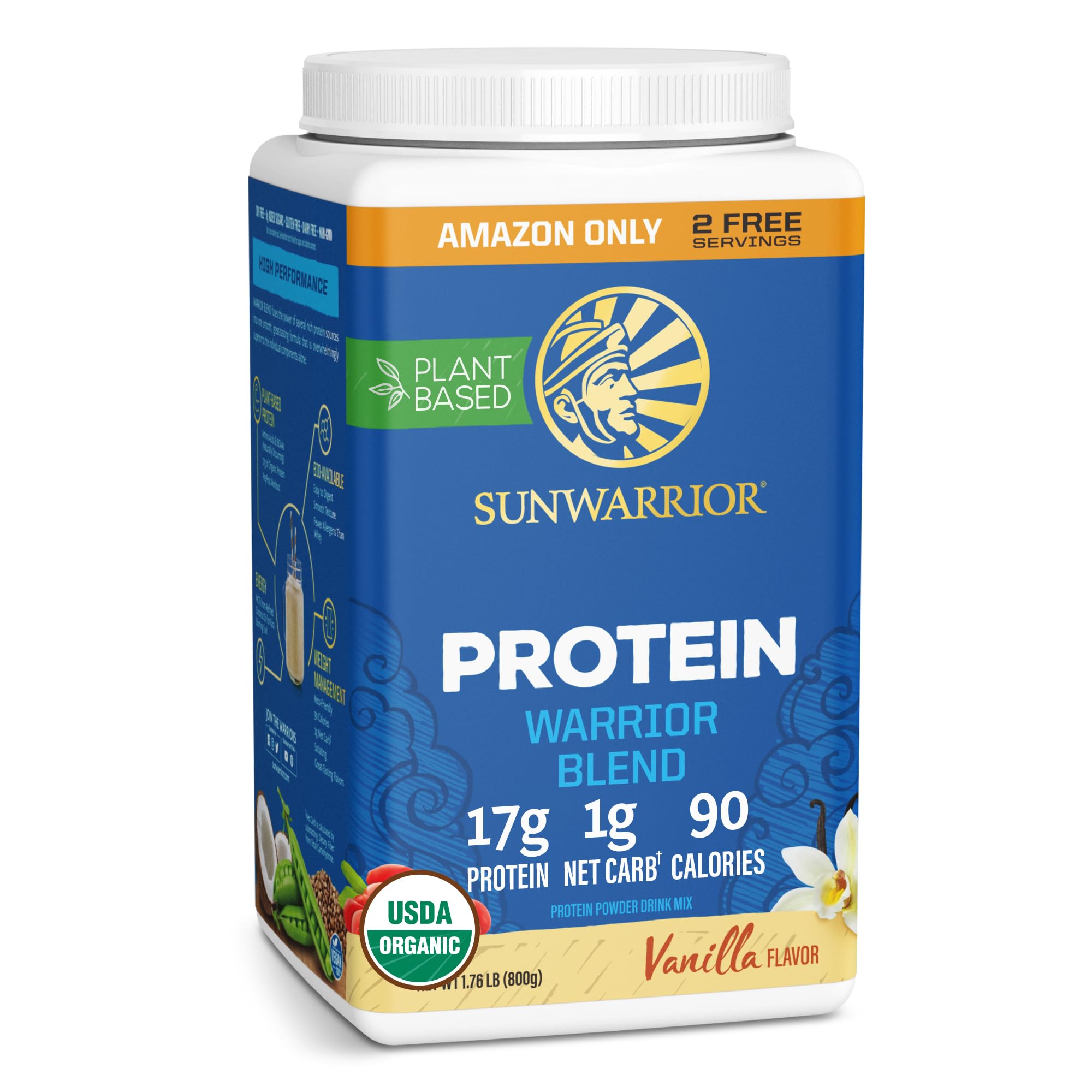
Plant protein has a reputation problem, and it is usually the stomach rather than the flavor that causes it. Sunwarrior is the bag we hand to someone who gave up on vegan powders after a week of bloating. It fuses several plant sources into one blend built to sit close to whey's amino acid profile, so switching off dairy does not cost you the thing you were buying protein for.

It is also the easiest of these to mix. A shaker bottle produces a smooth vanilla with no chalky aftertaste, and the sweetness stays low enough that fruit does not tip it into dessert territory. People who have bounced off sweet plant powders tend to get along with this one.

We keep it for the weeks when digestion is the variable, and that is the recommendation. The vanilla is pleasant rather than memorable, but it is the pick we trust to go down easy. The bag looks small next to the two-pound tubs at 1.76 pounds; it is divided into 32 servings, which puts the cost per shake closer to the budget picks than the price suggests.

Two things to know before you order. It costs more than the Orgain bags, and the texture is not unanimous — most describe it as smooth, but a smaller share find a grainy finish. If you are sensitive to grit, blend it rather than shake it.

Bottom line: Our pick when digestion is the worry: it mixes clean in a shaker, goes down easy, and the vanilla does not taste like peas.

4

KOS Vegan Protein Powder

KOS Vegan Protein Powder

Chocolate lovers

Our Score 8.6/10
Check Price

Worth Noting

  • Stevia is part of the sweetener blend
  • Bigger spend than our budget picks
Servings
28
Sweeteners
Stevia and monk fruit
Package Weight
2.58 lb
Digestive Enzymes
Included

KOS reads more like a dessert recipe than a supplement: organic Peruvian cacao, sea salt, organic coconut milk, and a touch of stevia and monk fruit. Behind that sits a multi-source plant protein blend, a digestive enzyme blend, and 28 servings in a 2.58-pound tub, all erythritol-free and certified organic.

It is the richest chocolate in this group, and it is the one we reach for when a shake needs to feel like a treat rather than a health product. Cacao and coconut milk do most of that work, and the sweetness stops short of cloying, which is a narrow line to walk with a chocolate protein powder. On flavor alone, nothing else here comes as close to a milkshake.

The trade is texture. Shaken in a bottle it stays noticeably grainy, and a blender is what turns it into the drink the recipe promises. That is a real cost if you are mixing at the gym, so factor in whether you have a blender at the hour you actually drink this.

What tips it for us is the enzyme blend. Pea and brown rice are where bloating usually starts, and this is one of the picks where that complaint largely does not follow. Twenty-eight servings per tub also means it lasts, which softens a shelf price that sits above the Orgain bags.

Bottom line: The best-tasting chocolate here: cacao, coconut milk, and sea salt make a shake that feels like a treat, with digestive enzymes along for the ride.

5

Orgain Protein + Greens

Orgain Protein + Greens

Greens and iron

Our Score 9.0/10
Check Price

Worth Noting

  • Vanilla is sweet enough to overwhelm some palates
  • Greens turn grassy in plain water
Sugar
0.04 oz
Greens Blend
Spinach, broccoli, kale
Added Nutrients
Iron and prebiotics
Protein Per Serving
0.74 oz

Take the Orgain formula we already recommend, drop the chocolate, add organic spinach, broccoli, and kale plus iron and prebiotics, and you have this bag. Twenty-one grams of the same pea, brown rice, and chia protein, one gram of sugar, USDA Organic, and a greens blend that is actually listed on the label rather than buried in a proprietary line.

The greens are the point. Iron is one of the nutrients a plant-based diet can run short on, and it is named on the front of this bag alongside prebiotics for gut health — a combination you will not find in the plain chocolate version. For a woman using one scoop a day as her protein base, that is a meaningful difference on paper.

It drinks like a sweet vanilla shake with a green edge. In water the greens read a little grassy and the texture thins out; blended with frozen banana or berries they disappear completely, and that is how we use it.

So the choice between the two Orgains here is a formula question, not a flavor one: iron and greens, or the cheaper chocolate you will drink without thinking about it. We keep this one for the mornings when the shake is standing in for a multivitamin rather than just topping up protein.

Bottom line: If you want iron and greens built into your protein instead of a second supplement, this is the bag — just plan to blend it with fruit.

6

Anthony's Premium Pea Protein

Anthony's Premium Pea Protein

Baking and oatmeal

Our Score 8.8/10
Check Price

Worth Noting

  • No scoop in the bag
  • Bag seal does not stay closed
Flavor
Unflavored, unsweetened
Certifications
Gluten free, vegan
Package Weight
2 lb
Protein Source
Pea protein isolate

Unflavored is a feature rather than a compromise, and Anthony's is the clearest example: a two-pound bag of pea protein isolate with nothing added — no sweetener, no flavoring, no filler, gluten-free and vegan. It is the cheapest bag in this group, and it is the one we keep for oatmeal, pancake batter, and smoothies that already have a banana doing the sweetening.

What it does well is disappear into other food. A spoonful thickens a smoothie without changing the taste, and it works in baked goods where a flavored powder would fight the recipe. In plain water it tastes like peas, which is exactly what it is, so judge it on what it does to your food rather than on how it drinks alone.

Treat it as a blender powder. Stirred into a cold liquid it stays gritty and lumpy no matter how long you go at it, and a blender is the difference between smooth and sandy. That is the cost of a single-ingredient isolate, and it is a fair trade if the powder is going into something you were already blending.

Bottom line: The one to buy if you want protein in your oatmeal rather than a shake in your hand: unflavored, unsweetened, and the lowest-priced bag here.

7

Ka'Chava Meal Shake

Ka'Chava Meal Shake

Meal replacement

Our Score 8.8/10
Check Price

Worth Noting

  • Only 15 servings per bag
  • Highest cost per serving in this group
Servings
15
Free From
Whey, gluten, soy, dairy
Superfoods
85+
Protein Sources
Pea protein and sacha inchi

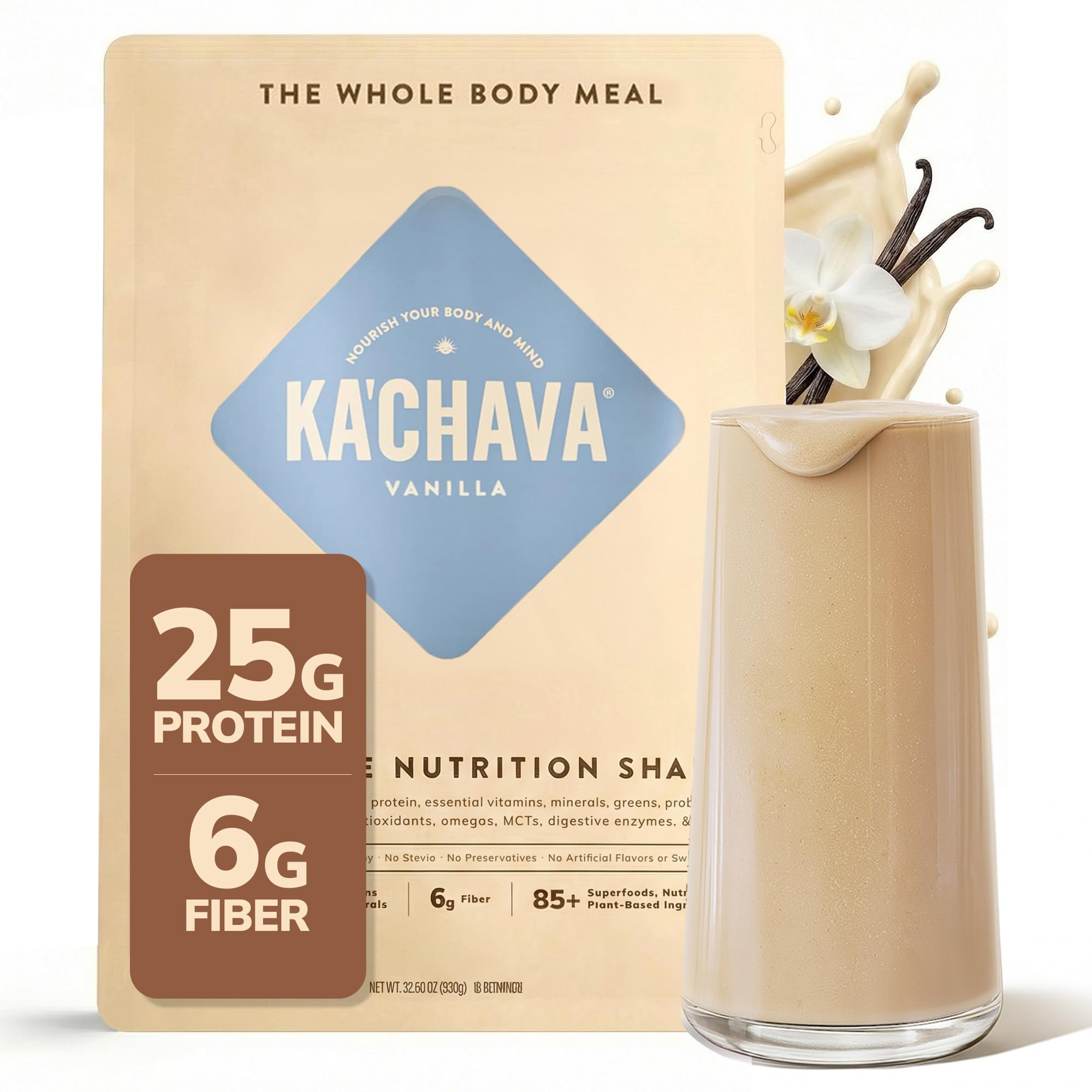
Ka'Chava is not really a protein powder, and it is worth being clear about that before you buy. It is a meal shake: pea protein and sacha inchi alongside maca, kale, super greens, MCTs, probiotics, adaptogens, and digestive enzymes, more than 85 superfoods in total, sold in 15-serving bags and free of whey, gluten, soy, and dairy.

What it does well is feel like a meal. Mixed with water it is thick and creamy, closer to a milkshake than the thin shaker drinks here, and it holds hunger through a morning in a way the lighter powders do not. If your problem is that a protein shake leaves you hunting for a snack an hour later, this solves it.

The vanilla runs sweet, and the texture is thick enough that it sits heavily for some people. If you are used to a thin shake, start with half a scoop and more liquid than the label suggests, then build up once you know how it lands.

The case for it is coverage: protein, fiber, vitamins, minerals, and greens in one scoop, which is more than any other pick here attempts. If you already eat well and just want protein, you are buying a lot of things you do not need.

Bottom line: A meal in a glass rather than a protein top-up: thick, creamy, and filling for hours, with the broadest nutrient list in this group.

8

Vega Protein + Recovery

Vega Protein + Recovery

High protein needs

Our Score 8.6/10
Check Price

Worth Noting

  • Highest upfront cost in this group
  • Strong aftertaste for some drinkers
Servings
45
Probiotics
2 billion CFU
Certification
NSF Certified for Sport
Protein Per Serving
1.06 oz

Thirty grams of protein per scoop is the highest number in this group by a wide margin, and it arrives in a 45-serving, four-pound bag. This is the one to look at if you are lifting seriously rather than topping up a smoothie, and it also carries NSF Certified for Sport, which matters if your training is subject to testing.

The rest of the formula backs that up: two billion CFU of probiotics, added fiber, and a dairy-free, gluten-free blend. Vega positions it for muscle recovery rather than general wellness, and that framing is fair given where it sits on protein density.

Where it gives ground is drinkability. It is the thickest, grainiest shake we made from this set, and it turns almost sandy at the bottom of the cup if you mix it at the strength on the scoop. More liquid helps considerably, and a blender with frozen fruit helps more. We keep it for high-protein days, not for pleasure.

Bottom line: The highest-protein option here, NSF certified and built for recovery — worth it if you can get past how thick it pours.

How We Tested Vegan Protein Powders at Home

I started with a shortlist of about 30 vegan powders pulled from best-seller lists, label comparisons, and the tubs friends kept pressing on me, then cut it by protein per serving, whether the plant-based claim was actually certified, added sugars and sugar alcohols, and cost per serving. That left 12, and we used each one for six months — not a single sip apiece, but a daily rotation so every powder got a fair run of mornings.

Most days the test was a shaker bottle at my desk: one scoop, eight ounces of water, ten seconds of shaking, then a look for clumps clinging to the lid or sludge at the bottom. Twice a week we blended them with frozen banana and spinach to see which turned gluey, and we stirred a few into oats left overnight in the fridge to check whether the powder thickened or separated by morning. Every flavor got tasted cold and again at room temperature, since sweetness reads differently warm, and we noted grittiness, chalkiness, and any aftertaste that lingered.

The rest of the test happened after we drank them. We logged whether we reached lunch without snacking, whether anyone felt bloated or gassy that afternoon, and whether the shakes held up as post-workout recovery across a few months of steady training. We also ran the numbers per serving rather than per tub, because a powder that lasts 15 servings is a very different purchase from one that lasts 30. Anything that clumped, spiked and crashed, or turned gritty in oatmeal was out, however good the ingredient panel looked.

How to Choose a Vegan Protein Powder

Protein per Serving and a Complete Amino Profile

Twenty grams a scoop is the working baseline for a supplement; below that you are mostly buying flavoring. The other half of the question is completeness. Pea and brown rice together cover all nine essential amino acids, which is why so many blends pair them, while a single pea isolate runs low on methionine. That is fine if you are also eating grains and oats, and less fine if the powder is your main protein source.

Multi-source blends such as Sunwarrior's are built to sit close to whey's amino profile, which makes them the easier swap if you are coming off dairy and want the same recovery support.

Read the Sweetener Line Before the Flavor Name

Most complaints about vegan protein are really complaints about sweetener. Stevia reads bitter or metallic to a good chunk of the population, monk fruit is rounder, and erythritol and other sugar alcohols are the usual suspects behind a rumbling stomach. Our top pick is monk fruit only, the Orgain bags skip erythritol but keep stevia, and KOS uses both.

If plant powders have disappointed you before, buy the smallest size of something monk-fruit-sweetened and test it before committing to a two-pound bag.

Texture Is Where the Category Falls Down

Plant proteins do not dissolve the way whey does — they suspend, which is why grit shows up in even good powders. A shaker gets the smooth blends most of the way there and a blender finishes the job, while a shake that pours too thick usually just needs more liquid.

Match the powder to your routine: if you are mixing at a desk or in a gym locker room, prioritize the picks here that come together in a bottle. If you are blending a smoothie anyway, texture barely matters and you can shop on taste.

What 'for Women' Should Actually Mean

Almost every vegan protein powder is sold to everyone, and the pink-labeled ones are rarely formulated differently. The claims worth reading are the ones covering what a plant-based diet can leave short: iron, calcium, vitamin D, B12, plus fiber and probiotics for digestion.

Only one pick here lists iron, so if that is why you are buying, check the supplement facts against what you already eat. A powder is a top-up, not a multivitamin replacement, and treating it as one is the most common mistake we see.

Compare Cost per Serving, Not Price per Tub

A big bag at a high price can be the better value, and a small one can be worse than it looks. Divide the servings into the cost before deciding: the four-pound Vega tub and the 15-serving Ka'Chava bag sit at opposite ends of that math, while Sunwarrior's compact 1.76-pound bag spreads across 32 servings.

If a powder is new to you, buy the smaller size first. An abandoned tub is the most expensive one on the shelf.

Frequently Asked Questions

Final Verdict

The default is EarthChimp. Monk fruit rather than stevia, 20 grams of complete plant protein, probiotics, and the best taste-and-texture showing in this group make it the tub we point most people toward first.

Take the Orgain chocolate fudge instead if you want the lowest-priced flavored bag and stevia does not bother you, or Sunwarrior if plant protein has ever left you bloated. Ka'Chava only makes sense if you are replacing breakfast outright; measured on protein per serving, it is the weakest value here.